Fin Projects delivers organic to wear

It all started with an idea. Anna Vetsch thought it must be possible to produce organic leather from 100% sustainable production. After all, there are a large number of sustainability labels in the food sector and especially in Swiss meat processing. However, it soon became clear that it wasn't that simple. This is because the origin of the animal hides has not played a role in leather production to date. Anna Vetsch can't really explain why this is the case: "Somehow, no one has really paid attention to making the entire leather production process sustainable." For the sustainability manager at Coop, this meant starting from scratch.

Two years ago, Anna Vetsch and her colleague Nina Kunkel joined Centravo. The company recycles all slaughter by-products for which the Swiss meat industry has no use. This also includes animal hides. And at Centravo, the two immediately found open ears. The challenge for Centravo was to find the right animal hides. Although the hides were clearly traceable thanks to the ear tag, nobody in the company could say which animals they came from. This required cooperation with a slaughterhouse. Stefan Ochsner from Centravo made contact with Stefan Seiler, Head of Animal Production at Bell Switzerland. And he made sure that Bell informed Centravo which hides were suitable for leather production. "I was looking for the best possible raw material for our leather and we finally found it at Bell," explains Anna Vetsch: hides from cattle from organic suckler cow husbandry. You can't get more sustainable than that in Switzerland.

Now it was time for Anna Vetsch and Nina Kunkel to find buyers for the leather. However, this was more difficult than expected. For this reason, the two decided without further ado to process the organic leather themselves. They brought designer Janine Wirth on board and the Fin Projects label was born.

Three bag variations, a key fob and a shoulder strap are now available in the first collection from Fin Projects. At the moment, only in a natural look. To ensure that leather production is as sustainable as possible, the leather has not been dyed for the time being. "With purely vegetable tanning, it's not easy to dye the leather so that the colors hold. However, we are working with our tanner in Tuscany to ensure that we will soon be able to offer dyed leather," says Anna Vetsch confidently.

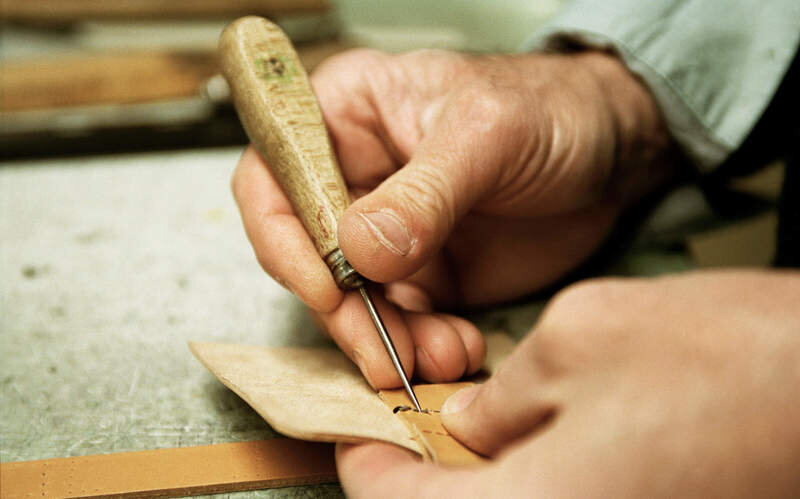
However, the lack of color has not detracted from the success of the products, quite the opposite. The first collection is almost sold out and individual items have already been produced. In addition, a new collection is already being planned, and the raw material will once again come from Bell. Anna Vetsch already has other ideas in mind for the future: "We would also like to produce shoes and furniture from our leather." And if things continue as they have so far, there is a good chance that Fin Projects will also be successful with this idea.
